Decoding Microsclerotherapy: A Definitive Guide for Addressing Spider Veins in Dubai
If you are exploring effective and minimally invasive solutions for spider veins (telangiectasias), you have likely come across the term microsclerotherapy. This technique is a widely accepted first-line treatment for small, superficial spider veins and is preferred for its precision and long-term results.
For residents and visitors seeking expert vascular care in Dubai, understanding how microsclerotherapy works—and why a specialist’s expertise matters—is essential. This guide is based on the clinical approach of Dr. Ashok Gupta, Vascular Surgeon, who specializes in lower-limb venous diseases and minimally invasive vein treatments.
What Is Microsclerotherapy? A Scientific Yet Simple Explanation
Microsclerotherapy is a refined medical procedure designed specifically to eliminate very small, superficial veins, commonly called spider veins. It differs from general sclerotherapy because it focuses on extremely fine vessels that require precise technique and magnification.
How It Works
The procedure aims to safely and permanently close the unwanted vein through a controlled healing process:
- Precise Injection:
A very fine needle is used to introduce a small amount of a medically approved solution (called a sclerosant) into the targeted spider vein. - Vein Reaction:
The solution gently irritates the inner lining of the vein, causing the vein to collapse and seal shut. - Absorption by the Body:
Over several weeks, the treated vein is naturally dissolved and absorbed by the body.
Blood flow is smoothly redirected to healthier, deeper veins.
This controlled process leads to long-term improvement in the appearance of spider veins.
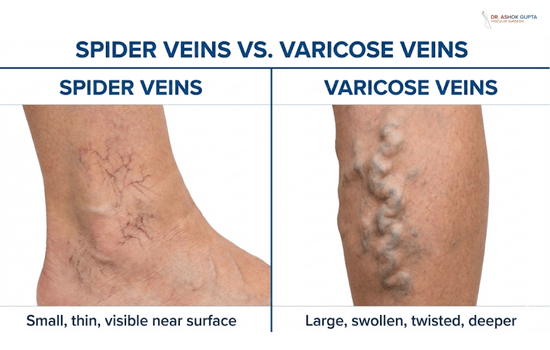
Spider Veins vs. Varicose Veins: Why This Difference Matters
| Feature | Spider Veins (Telangiectasias) | Varicose Veins |
| Appearance | Fine red, blue, or purple thread-like lines | Large, bulging, rope-like veins |
| Size/Depth | Very small and superficial | Larger and deeper |
| Symptoms | Usually cosmetic | Aching, heaviness, cramps, swelling |
| Best Treatment | Microsclerotherapy or laser | EVLA, RFA, foam, or phlebectomy |
Important Note from a Vascular Surgeon
Spider veins may sometimes be the surface sign of deeper venous reflux.
Therefore, a pre-procedure Duplex Ultrasound scan is strongly recommended to identify any hidden issue. Treating deeper reflux first ensures spider vein treatment is effective and long-lasting, preventing recurrence.
Step-by-Step: What to Expect During the Procedure
A typical microsclerotherapy session lasts between 30 minutes to one hour, depending on how many areas are being treated.
1. Preparation
- The skin is cleaned thoroughly.
- Enhanced lighting and magnification tools are used for precise targeting.
- In some cases, transillumination devices help identify feeding veins.
2. Injection Phase
- A very fine needle is used to inject a small amount of sclerosant solution.
- Only the minimal required quantity is used to ensure safety and accuracy.
- You may feel a mild stinging or warming sensation for a few seconds—this is normal.
3. Aftercare and Recovery
Recovery is usually simple and comfortable:
- Compression Stockings:
You will be advised to wear medical compression stockings (generally light to moderate pressure) for several days.
This is one of the most important steps and helps the veins remain closed. - Walk Immediately:
Walking improves circulation and reduces the risk of clotting. - Avoid for 1–2 Weeks:
- Strenuous exercise
- Hot baths, saunas
- Direct sun exposure on treated areas
Why Choose a Vascular Surgeon Like Dr. Ashok Gupta?
The expertise of the practitioner performing microsclerotherapy directly affects results and safety.
A Vascular Surgeon Provides:
- Accurate Diagnosis
The ability to perform and interpret Duplex Ultrasound ensures that deeper causes (like venous reflux) are detected and treated first. - Higher Safety Standards
Detailed knowledge of vascular anatomy reduces risks such as accidental injection into non-target structures or complications. - Complete Treatment Approach
If you have deeper varicose veins, a vascular surgeon can provide primary treatments (EVLA/RFA) before addressing cosmetic spider veins, ensuring the best long-term results.
Results and Follow-Up Expectations
- Initial improvement appears in a few weeks.
- Full results take 2–6 months, depending on the extent of veins.
- Multiple sessions (usually 2–4) spaced 4–6 weeks apart may be required.
Treated veins are permanently removed, but new veins may develop over time due to genetics, hormones, or lifestyle.
Occasional maintenance sessions may be helpful.
Risks, Side Effects, and Contraindications (Simple and Patient-Safe)
Microsclerotherapy is safe when performed by trained specialists, but like any medical procedure, minor side effects can occur.
Common Temporary Side Effects
- Mild bruising
- Small brownish spots (temporary pigmentation)
- Very fine new capillaries (matting), usually temporary
Less Common but Possible
- Small areas of inflammation
- Localized tenderness
- A small lump of trapped blood (easily managed in clinic)
Who Should Avoid Microsclerotherapy?
- Pregnant individuals
- Those with active skin infections
- Anyone with known allergies to sclerosant ingredients
- Patients with a history of DVT require specialist evaluation firs
Conclusion
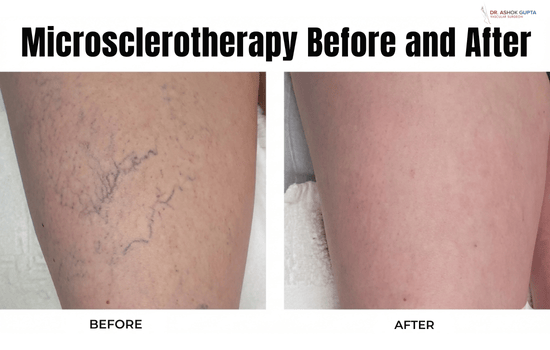
Microsclerotherapy is a highly effective, low-risk, and minimally invasive solution for spider veins when performed by experienced vascular specialists. With proper diagnosis, expert technique, compression therapy, and follow-up, patients can achieve clearer, more confident-looking legs with long-lasting results.
Frequently Asked Questions (FAQ)
Yes—the treated veins disappear permanently. However, new veins can form with time, so maintenance may be needed.
Most patients describe it as a quick pinch or mild stinging. No anesthesia is required.
Light walking is immediate. Strenuous exercise should be avoided for about 1–2 weeks.
No. Facial veins are better treated with specialized vascular lasers, as the skin is more delicate and precision requirements are different.