
Hemosiderin Staining
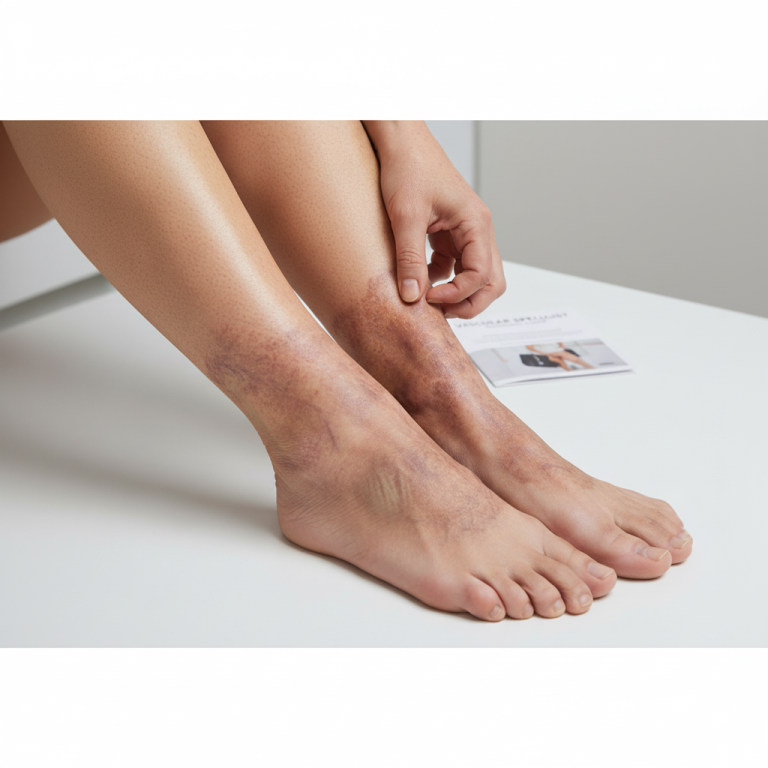
Hemosiderin staining acts like a natural ‘early warning system’ for vein problems — spotting it early can prevent more serious complications like leg ulcers! |
Restoring confidence & circulation - Hemosiderin staining treatment in Dubai
When brown patches appear around your ankles or lower legs, it’s more than a cosmetic concern! Hemosiderin staining, a common skin discoloration linked to poor blood circulation or vein conditions that indicates your veins need expert attention.
At the forefront of vascular care in Dubai, Dr. Ashok Gupta, a renowned vascular and endovascular surgeon, brings over two decades of specialized experience treating complex venous disorders.
Restore confidence and mobility – healthier legs and faster recovery with Dr. Ashok Gupta!
What is Hemosiderin Staining?
Hemosiderin is an iron storage complex that accumulates under the skin. It happens due to hemoglobin, a protein molecule that contains iron. When hemoglobin breaks down, it releases iron. The trapped iron is stored as hemosiderin underneath the skin, causing visible hemosiderin staining. The iron deposits create a rust-brown discoloration often seen around the ankles or lower legs. While it resembles a cosmetic concern, hemosiderin staining usually points to vascular conditions such as varicose veins or chronic venous insufficiency. In these conditions, blood flow is slow leading to pressure buildup in the veins.
When to see a vascular specialist?
If you notice brown, rust-colored, or purplish patches around the lower legs or ankles, along with swelling, heaviness, or itching, it’s time to consult a vascular specialist. Consult Dr. Ashok Gupta for early evaluation and prevent complications such as leg ulcers and chronic inflammation.
Hemosiderin staining symptoms - What are the early signs?
Hemosiderin staining symptoms are often mistaken for skin tanning or pigmentation. But these symptoms develop gradually,
- Rust-brown or reddish patches near the ankles
- Swelling in the lower legs
- Itching, dryness, or skin tightening
- Leg heaviness or visible varicose veins

Treatment for Hemosiderin Staining
Most patients ask, “Is hemosiderin staining dangerous?” The reality is that hemosiderin staining isn’t life-threatening, but it shows an early warning sign of compromised blood circulation. Dr. Ashok Gupta will identify the root cause and provide the most appropriate treatment. He customizes the treatment plan, providing cosmetic and clinical outcomes.
There’s no quick fix for hemosiderin staining; the treatment reduces pigment leakage and improves venous circulation.
Topical Treatment
Topical creams or gels containing retinoids or hydroquinone prevent hemosiderin stains from further darkening.
Laser therapy
Laser or radiofrequency ablation (RFA) are minimally invasive treatments that use specialized lasers to break down hemosiderin pigments.
Laser vs topical cream for rust-brown discoloration from hemosiderin deposits – Which is the best?
Topical creams are noninvasive and painless. They’re easy to apply at home and the best option for mild hemosiderin staining. On the other hand, laser treatments are effective for severe discoloration. Laser therapy provides visible improvements and lasting results for moderate to advanced hemosiderin staining.
Compression Therapy
Compression therapy improves blood circulation and reduces pooling. Depending on the patient’s needs, compression therapy may be delivered in different ways, such as stockings, bandaging the limbs, supportive socks, tights, or wraps.
Compression stockings effectiveness for hemosiderin staining around ankles
Compression stockings gently apply pressure to the legs, helping blood flow upward toward the heart, thereby reducing venous pressure and fluid leakage.
Under proper medical evaluation and guidance, compression stockings reduce swelling, prevent further deposits, and improve skin appearance.
Underlying causes of hemosiderin staining - when to see a vascular specialist?
Initially, it’s essential to understand ‘what causes hemosiderin staining?’ to address it effectively. The possible causes are,
Chronic venous insufficiency (CVI)
occurs when leg veins fail to return blood to the heart due to weakened or damaged valves. Blood pools in the veins, causing swelling, pain, skin color changes, or even ulcers.
Varicose veins
are twisted or enlarged veins often seen in the legs. It’s caused by damaged or weakened veins that allow blood to pool. The varicose veins are bulged, blue, or pink in color under the skin. It may cause aching, swelling, or discomfort.
Leg injuries or trauma
cause localized blood leakage under the skin.
Post-surgical or diabetic complications
can lead to capillary fragility, where small blood vessels rupture or break easily, causing bruising or bleeding under the skin.
Why choose Dr. Ashok for Hemosiderin staining treatment in Dubai?
Dr. Ashok Gupta is a trusted name in Dubai’s vascular health community, with more than two decades of expertise in vascular and endovascular surgery. Blending clinical precision and empathetic care, each patient receives the safest and most effective treatment for hemosiderin staining feet and related vein conditions.
His expertise in laser and radiofrequency ablation techniques ensures minimal downtime, reduced recurrence, and aesthetically pleasing outcomes — making him one of the best vascular surgeons in Dubai for venous disorders.
Say GoodBye to Hemosiderin staining feet! For Healthier legs – Book your consultation today!
Hemosiderin staining affects not only your appearance but also your vascular health. Explore safe and effective treatment for hemosiderin staining from Dubai’s trusted Vascular Surgeon – Dr. Ashok Gupta — Book an appointment now!
FAQs
How to get rid of hemosiderin staining?
Treatment focuses on improving circulation and addressing the underlying vein problem. Minimally invasive procedures like laser or radiofrequency ablation (RFA), combined with compression therapy and medical-grade creams, can help reduce discoloration and prevent recurrence.
Is hemosiderin staining dangerous?
Hemosiderin staining isn’t dangerous on its own, but it’s often a sign of poor vein health or venous insufficiency. Left untreated, it may lead to inflammation, skin thickening, or even ulcers, so early treatment is essential.
What diseases are associated with hemosiderin?
Hemosiderin deposits can occur in chronic venous insufficiency, varicose veins, leg ulcers, and vascular injuries. They may also appear in systemic disorders involving blood leakage or iron overload.
Does venous insufficiency cause hemosiderin staining?
Yes. Venous insufficiency is one of the most common causes of hemosiderin staining. When vein valves weaken, blood pools in the legs, causing red blood cells to break down and release iron that stains the skin.
How does hemosiderin affect the skin?
It causes rust-brown or reddish discoloration around the ankles or lower legs. Over time, the skin can become thick, dry, or itchy, especially if circulation doesn’t improve.
How to fade hemosiderin staining on lower leg due to venous insufficiency?
To fade hemosiderin staining, you need to treat the venous insufficiency first. Laser therapy, RFA, or sclerotherapy can correct circulation, while topical creams and compression stockings help lighten the pigmentation and prevent new deposits.
Is hemosiderin staining permanent, and what treatments work best?
If treated early, hemosiderin staining can fade significantly or even clear completely. The most effective treatments include laser or radiofrequency ablation for the veins and targeted skin therapies for discoloration.