
5 Foam Sclerotherapy Aftercare Tips: Managing Pain, Walking & Compression

The Right Way to Handle Compression, Walking & Sun Exposure
Foam sclerotherapy with Dr. Ashok Gupta is an effective and minimally invasive treatment for varicose and spider veins. However, the success of the procedure does not depend on the treatment alone. Proper aftercare plays a crucial role in healing, vein closure, and long-term results.
How you care for your legs in the days and weeks following foam sclerotherapy can significantly influence both medical and cosmetic outcomes. With correct compression, gentle movement, avoidance of heat and strenuous activity, and sensible skin care, most patients recover smoothly and see steady improvement.
While noticeable changes may appear within one to two weeks, complete healing and final results take time. If you experience unusual pain, persistent swelling, increasing redness, or skin changes, you should contact Dr. Gupta’s clinic promptly.
Below are five essential aftercare rules commonly recommended for optimal recovery after foam sclerotherapy.
1. Compression Stockings Are Essential, Not Optional
Immediately after foam sclerotherapy, the treated veins are delicate and need support. Medical-grade compression stockings help keep blood flowing properly, support vein closure, reduce swelling and bruising, and lower the risk of recurrence.
Most patients are advised to wear compression stockings during the day for approximately 7–14 days, depending on vein size and individual healing response.
Even if discomfort improves early, removing compression stockings too soon may affect treatment results. Following your doctor’s instructions closely gives the veins the best chance to heal properly.
2. Walk Regularly, but Avoid High-Impact Exercise
Gentle movement is one of the most important parts of recovery. Walking for 20–30 minutes on the same day or the day after treatment improves circulation and helps reduce the risk of clot formation.
However, strenuous activities should be avoided for at least 1 week, and in some cases up to 2 weeks. This includes:
- Running or jogging
- Gym workouts
- Aerobics
- Heavy lifting
- High-impact sports
Light walking is encouraged, but intense exercise should only be resumed once your doctor confirms it is safe.

3. Avoid Heat and Extreme Water Temperatures
Heat causes blood vessels to expand, which can interfere with vein closure after sclerotherapy. For this reason, patients are advised to avoid heat exposure for at least one week, including:
- Hot baths
- Saunas
- Steam rooms
- Hot tubs
Showers are generally allowed after the first 24 hours, but they should be short and lukewarm. Avoid directing hot water jets at treated areas.
4. Limit Prolonged or Intense Sun Exposure (Not Routine Sunlight)
After foam sclerotherapy, the treated skin may be temporarily sensitive. Only prolonged or intense sun exposure should be avoided, especially during the early healing phase.
This includes:
- Tanning or sunbathing
- Long hours in strong midday sun
- Tanning beds or artificial UV exposure
Normal daily sun exposure is generally safe and does not need to be avoided. If you expect extended outdoor exposure, protect the treated area with clothing or apply a broad-spectrum sunscreen (SPF 30 or higher) to reduce the risk of skin pigmentation changes.
5. Monitor Gently and Be Patient with Healing
Mild bruising, tenderness, firmness along treated veins, or throbbing pain after sclerotherapy are common, especially during the first week. These symptoms usually resolve gradually.
Your body slowly absorbs the treated veins over time. While improvement may be noticeable early, final cosmetic results often take several weeks to a few months.
Contact your doctor if you notice:
- Increasing redness or warmth
- Persistent or worsening pain
- Skin becoming hot or very tender
- Open sores or signs of infection
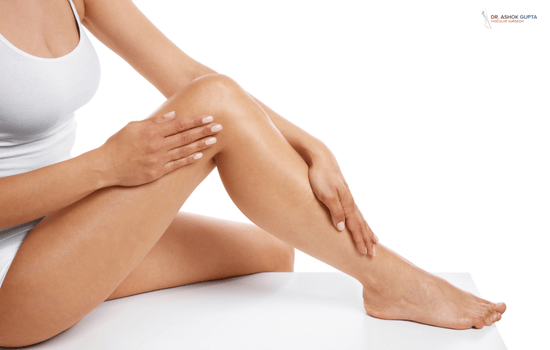
What to Expect After Foam Sclerotherapy
Days 1–2
- Wear compression stockings
- Walk gently
- Avoid heat and prolonged sun exposure
- Mild aching or throbbing is normal
Days 3–7
- Continue daytime compression
- Maintain regular walking
- Bruising, firmness, or slight discoloration may appear
Weeks 2–4
- Compression may be gradually reduced as advised
- Resume light, non-impact activities
- Skin tone and bruising begin to improve
Following Months
- Treated veins continue to fade
- Legs appear smoother
- Most side effects resolve completely
Why Choose Dr. Ashok Gupta
Foam sclerotherapy with Dr. Ashok Gupta combines clinical expertise with personalized aftercare guidance. While the procedure itself is effective, following the correct recovery steps—compression, walking, heat control, sensible sun exposure, and patience—ensures the best long-term results.
If you experience unusual pain, persistent swelling, or redness, Dr. Gupta’s clinic is always available to guide you through recovery.
With proper care and realistic expectations, you can enjoy healthier-looking legs and renewed confidence.
Recent Blogs
Quick Enquiry
Frequently Asked Questions
What should I avoid after foam sclerotherapy?
Avoid skipping compression stockings, high-impact exercise, heavy lifting, hot baths or saunas, leg massages, and prolonged or intense sun exposure during the first 1–2 weeks.
Can I shower after foam sclerotherapy?
Yes. Showering is usually allowed after 24 hours using lukewarm water. Avoid hot showers, baths, or saunas for at least one week.
What is the recommended aftercare for sclerotherapy?
Wear compression stockings as advised, walk daily, avoid strenuous exercise and heat, limit prolonged sun exposure, and monitor for unusual symptoms.
How can I speed up healing after sclerotherapy?
Follow compression and walking instructions, elevate your legs when resting, stay lightly active, protect treated skin, and avoid unnecessary medications unless prescribed.
What activities should be avoided and for how long?
Avoid heavy workouts, running, or weightlifting for 1–2 weeks. Avoid hot tubs, saunas, and extended sun exposure for about 1–2 weeks.
What recovery time should I expect?
Walking is encouraged immediately. Bruising, mild pain, or firmness are common and temporary. Veins fade gradually over weeks to months.